Smart strategies for small multifamily investing

Diego Angulo
Última actualización: 2026-07-09
Diego Angulo
Última actualización: 2026-07-09
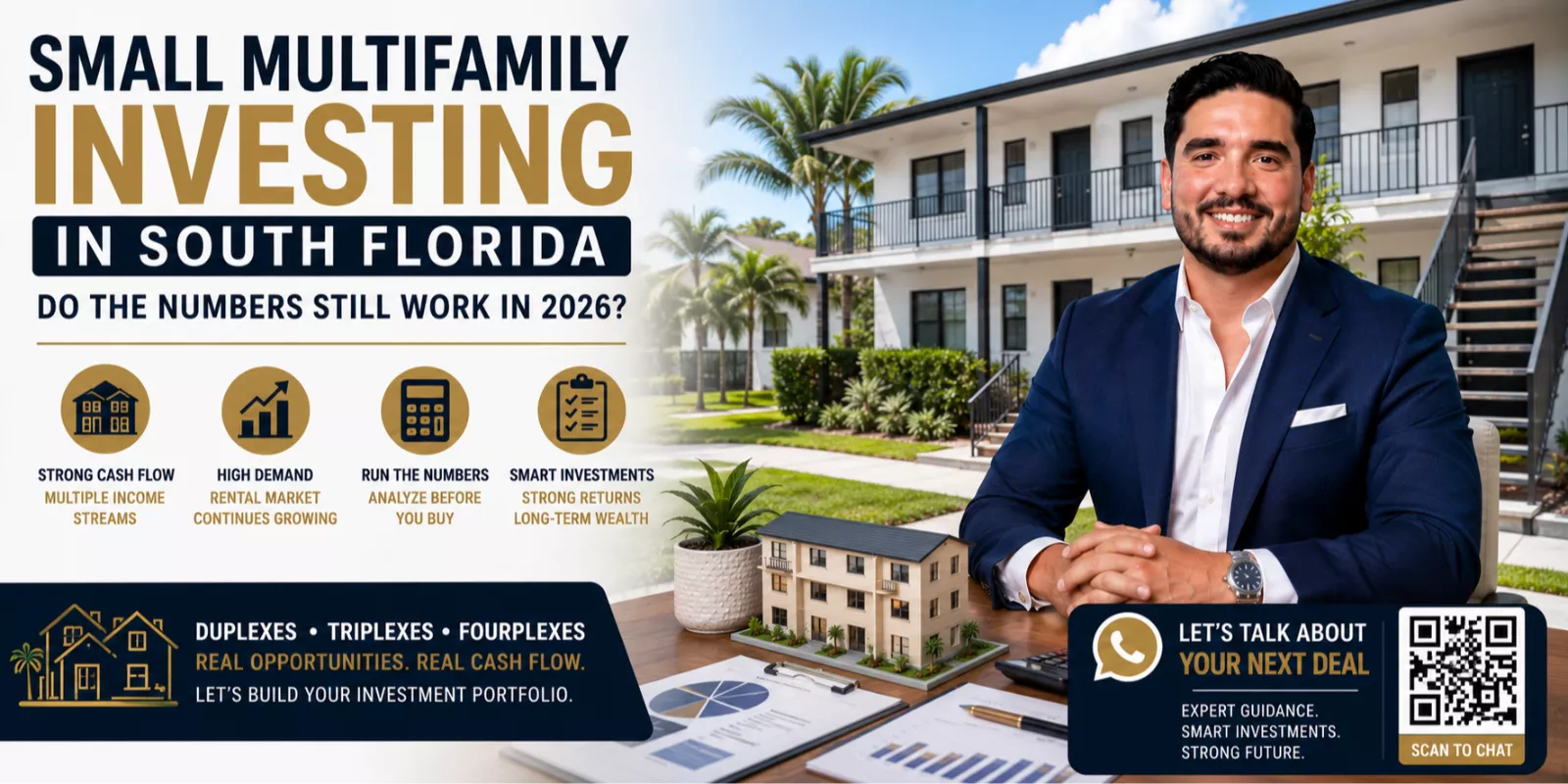
Investing in a duplex, triplex, or fourplex in South Florida remains one of the most attractive ways to build long-term wealth. However, in 2026, higher insurance costs, changing interest rates, and rising operating expenses mean investors must analyze every deal carefully before making an offer.
This guide explains what you should evaluate before purchasing a small multifamily property so you can avoid costly mistakes and focus on investments that truly generate positive cash flow.
Small multifamily properties continue to be one of the most popular investment options in South Florida because they offer multiple income streams while remaining easier to finance than larger apartment buildings.
A duplex, triplex, or fourplex can generate consistent rental income, help offset financing costs, and build long-term equity. However, a property that looks profitable online isn't always a good investment once you factor in insurance, taxes, maintenance, vacancies, and financing.
Before making an offer, every investor should evaluate the numbers objectively—not emotionally.
The most successful investors focus on cash flow first and appreciation second. Buying the right property at the right price is what creates long-term wealth.
Before purchasing a duplex, triplex, or fourplex, review these key factors:
Never rely only on the seller's projections. Verify every number before moving forward.
A client approached me about a triplex listed at $750,000. The rent roll suggested total monthly income of $4,500. However, after evaluating the vacancy rate of 10%, insurance costs at $1,800 per year, and property management fees of 8%, the net cash flow dropped significantly. We had to negotiate the price down to $700,000 to make the investment worthwhile.
This property was marketed with a strong cap rate of 6%. Upon inspection, I found substantial repairs were needed, which would cost nearly $30,000. The expected rent growth was optimistic given current market conditions. This case highlighted how superficial online listings could mislead investors into thinking they were getting a good deal.
A fourplex was listed at $1 million with a promising cash-on-cash return of 9%. After conducting a thorough analysis that included reserve funds for unexpected repairs and tenant quality checks, we discovered one unit had chronic maintenance issues. This discovery led us to walk away from what seemed like a great opportunity.
Ready to explore your next investment opportunity? Let's connect!
You should assess purchase price, potential rents, vacancy rates, insurance costs, taxes, and necessary repairs. Understanding these metrics will give you a clearer picture of your potential return on investment.
Cap rate is calculated by dividing the net operating income (NOI) by the property's purchase price. A higher cap rate usually indicates a better return but may come with higher risks.
Many investors overlook hidden costs like maintenance and management fees or fail to account for market fluctuations affecting rent prices.
This depends on your experience and available time. Managing yourself can save money but often requires significant time and effort.
Research local market trends and economic indicators. Areas with growing job opportunities and infrastructure improvements typically see better rent growth.
If you're looking for expert advice on small multifamily investment opportunities in South Florida, get in touch with me today!
As an experienced South Florida real estate broker, I help investors navigate the complexities of multifamily investing. With my expertise, I can guide you through the numbers so you can make informed decisions that lead to successful investments. If you're interested in analyzing potential opportunities in Miami-Dade, Broward, or Palm Beach counties, please reach out!
Soy un empresario inmobiliario, inversionista y Broker Associate enfocado en la adquisición, comercialización y desarrollo estratégico de activos inmobiliarios. Desde el sur de la Florida, asesoro a clientes nacionales e internacionales en oportunidades residenciales, comerciales y de inversión, combinando inteligencia de mercado, visión financiera y una poderosa red de relaciones estratégicas.
Reconocido por mi enfoque orientado a la creación de patrimonio, ayudo a mis clientes a transformar decisiones inmobiliarias en oportunidades de crecimiento, protección de capital y generación de riqueza a largo plazo.
Mi visión empresarial se extiende más allá de las transacciones tradicionales, con el objetivo de construir un ecosistema de empresas relacionadas con bienes raíces, inversión y desarrollo que aporte valor sostenible a inversionistas, familias y comunidades.
Maximizing home value with Pre-listing inspections
In Florida's real estate market, a pre-listing inspection can greatly benefit sellers. This article discusses what a pre-listing inspection entails, its advantages, real-life case studies, and answers common questions to help homeowners prepare effectively for selling their property.
Hipotecas asumibles en Florida. Tu opción inteligente
Las hipotecas asumibles en Florida ofrecen a los compradores la oportunidad de adquirir propiedades con pagos mensuales más bajos, aprovechando préstamos existentes de vendedores. Este artículo explora sus ventajas, requisitos y casos prácticos para facilitar la compra de vivienda.
Proceso de compra de casa en Florida para hispanos
¿Te has preguntado qué sucede después de que aceptan tu oferta para comprar una casa en Florida? Este artículo te guiará a través del proceso, desde el depósito de escrow hasta el cierre, destacando errores comunes y ofreciendo consejos prácticos para compradores hispanos.